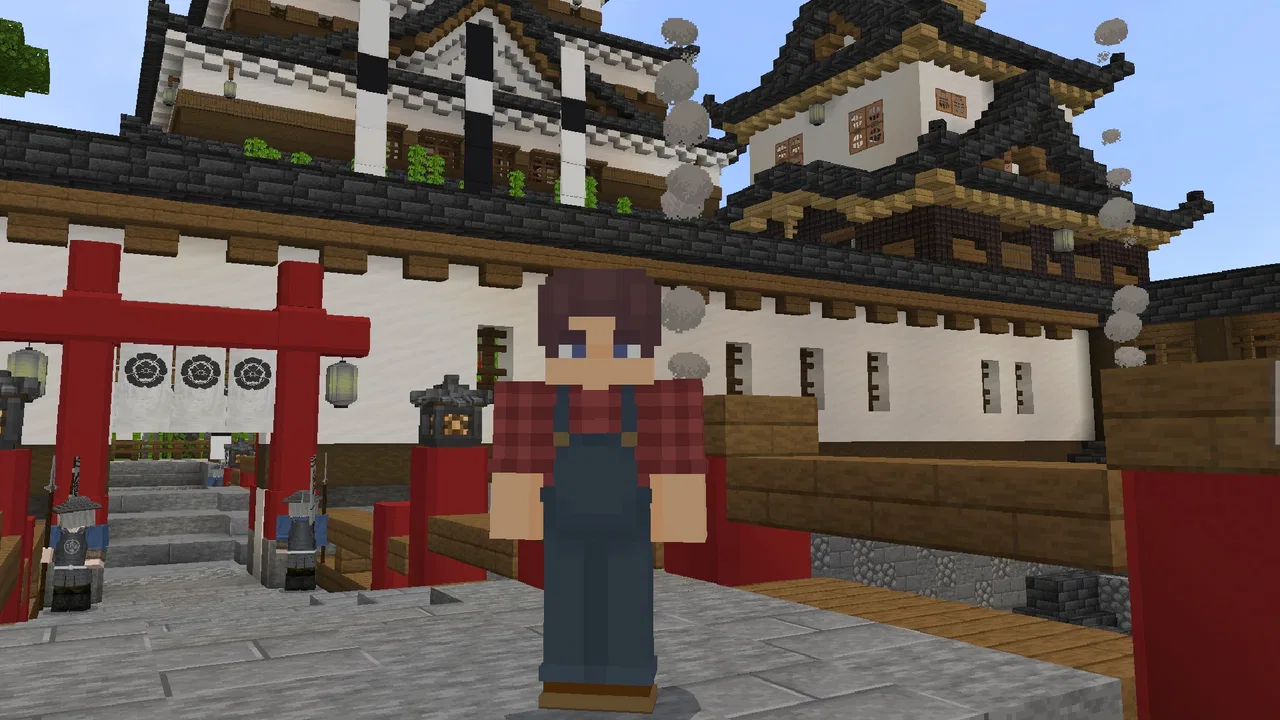
Block City Mansion
- 3.3
- Rating
- 1.00M
- Installs
- Free
- Price

 Analysis by App-foxy
I approached Block City Mansion as a small, easygoing building game rather than a deep city-management simulation, and that distinction matters. Its central appeal is the pleasure of shaping a villa inside a modern block-style city, then looking around to see how the pieces fit together. I found it most enjoyable when I treated each building decision as a short creative project instead of expecting a long economic strategy campaign.
The game comes from ABW apps and sits in the simulation category, although its emphasis is clearly on construction and visual experimentation. It is free to play and suitable for Everyone, which makes it an approachable choice for younger players, casual users, or anyone who wants a low-pressure building experience on an older Android device. It supports Android 7.0 and above, and the current version is 112-a-x.
My overall view is positive but measured: this is a straightforward villa-building game with a welcoming premise, not a replacement for a full sandbox builder or a detailed urban-planning title. If you like arranging spaces, trying different layouts, and exploring a block city without a demanding learning curve, it is worth trying. If you need complex resource chains, deep customization, or a large social world, its simplicity may feel limiting fairly quickly.
You May Also Like

 Blood Strike: 2.5 Anniversary
Blood Strike’s Loadouts Turn Every Drop Into a Tactical Gamble
A close look at Blood Strike’s custom loadouts: how fast access to signature weapons reshapes its battle royale rhythm, rewards preparation, and narrows the gap between fights.

 Pandora - Music & Podcasts
Pandora’s Music Is Easy to Start, but Harder to Recover
Pandora’s strength is its low-effort path from a seed to a station. Its weak spot is how much confidence it asks you to place in connection, setup, and quiet recovery.

 8 Ball Pool
 Is Built on Rivalries, Rematches, and Routine
A close look at the rivalries, rematches, shared routines, and unanswered safety questions that turn a quick pool match into a persistent mobile community.

 Samsung Music
’s Quiet Strength Is Playing What You Already Own
Its reach comes less from spectacle than from dependable access to a personal library. That simplicity is both the app’s strongest retention engine and its ceiling.

 AccuWeather: Weather Radar
AccuWeather Review: A Quick, Clear Forecast for Everyday Decisions
For everyday plans, the best forecast is the one you can understand quickly. AccuWeather makes rain timing, radar, and local conditions easy to act on, with a few trade-offs.

 Hill Climb Racing
Why Hill Climb Racing Still Turns Crashes Into One More Run
A tiny car, a bumpy hill and one more upgrade: Hill Climb Racing keeps resurfacing because its simple chaos makes every near-miss feel personal.
More From Our News Desk



What makes the building loop appealing
The strongest part of the experience is the immediate connection between an idea and a visible result. Instead of spending a long time learning complicated menus, I could focus on the basic fantasy of making a home look the way I wanted. That directness gives the game a relaxed rhythm: enter, build, inspect the result, and decide what to change next.
The modern block-city setting also gives the villa a useful sense of place. A house feels more interesting when it belongs to a wider neighborhood than when it floats in an empty editor. Exploring the surrounding city helps break up construction sessions, especially when I wanted to stop adjusting the property and simply look at the environment from a different angle.
I especially liked the way a small change can alter the impression of the whole property. Moving attention from the front of the villa to its interior or nearby streets makes it easier to notice awkward choices. This suggests a practical workflow: build the main structure first, walk around it, and only then spend time refining the details. That approach prevents the common mistake of decorating one area heavily before discovering that the overall shape feels unbalanced.
Another useful habit is to create a rough version before trying to make a polished one. In a game centered on villas, it is tempting to chase a perfect-looking home immediately. I found that testing a basic arrangement first made later decisions easier. It also reduced the frustration of repeatedly rebuilding the same section because the original plan looked better in my head than it did on screen.
The city exploration element adds value beyond the building screen. It gives me a reason to step back from my own property and consider the scale of the neighborhood. A villa that looks impressive by itself may feel oversized beside nearby structures, while a modest design can appear more convincing when it matches the surrounding block. That relationship between private space and public setting is one of the more interesting ideas in the game.
At the same time, I would not describe the experience as a demanding simulation. The appeal comes from visual choices and gentle experimentation rather than from managing a complicated household, balancing a city budget, or responding to a constantly changing economy. Players who enjoy those systems should adjust their expectations before downloading. This is closer to a casual creative toy with a city backdrop than to a serious planning simulator.
A practical way to play without feeling stuck
For a first session, I recommend resisting the urge to fill every available area. Start with the villa's basic silhouette and leave room to judge how it looks from different directions. Once the main shape feels right, work through the property in zones: entrance, living areas, private rooms, and exterior space. Even when the game is simple, dividing the project this way makes the result feel more intentional.
I also found it helpful to pause after each major change instead of making several adjustments at once. If the front of the building suddenly looks crowded, knowing which change caused the problem makes correction much easier. This is a small technique, but it turns casual placement into a more satisfying design process.
Exploration can serve as a reference tool rather than just a break. I used the block city to compare proportions, spacing, and the general feel of my villa against its surroundings. Looking at the neighborhood before rebuilding helped me avoid creating a property that felt disconnected from the setting. For players who enjoy design, that kind of self-imposed challenge adds depth without requiring extra systems.
A second useful approach is to build for a specific everyday scenario. Instead of making a villa that is merely large, imagine a family arriving home, guests gathering near the entrance, or residents moving between indoor and outdoor areas. Giving each part of the property a purpose makes placement decisions more coherent. It also helps players who find open-ended building games overwhelming because they can begin with a simple story rather than a blank canvas.
Where the simplicity starts to show
The same accessibility that makes the game easy to approach can also make it feel thin for experienced simulation players. I did not come away expecting the layered decision-making found in larger city builders. There is no reason to choose this title if your main interest is detailed infrastructure, complex finances, long-term population planning, or a highly reactive world.
The building concept can also lose momentum once the novelty of the first villa fades. A creative game needs enough variety to keep experimentation fresh, and players who quickly exhaust their preferred style may feel that the experience has become repetitive. I would approach it as a series of short design sessions rather than a game that must occupy every evening for weeks.
That makes the free price useful, but it does not remove the need to judge the game on its own scale. Free access is a good reason to test the experience, especially if you enjoy casual construction, yet it should not be confused with the depth of a premium sandbox. The right question is not whether it offers everything a larger title does; it is whether its focused villa-and-city loop is enough for the kind of play you want.
The average rating is 3.3 from around 200 ratings, with 7 written reviews shown alongside it. I read that as a sign to keep expectations realistic rather than as an automatic warning. The game has a clear audience, but its straightforward design will not satisfy everyone. A player looking for a quick creative diversion may appreciate exactly the qualities that frustrate someone searching for a more advanced simulation.
There is also a difference between enjoying the idea of designing a home and enjoying the actual process of repeating small adjustments. If you prefer games that constantly introduce objectives, unlocks, or dramatic events, the calm pace may feel underpowered. I would skip it in favor of a broader building alternative if the main attraction for you is progression through increasingly complex systems rather than the act of arranging a villa.
Who should install it
I think the best audience is someone who wants a friendly building game that can be understood quickly. It works particularly well for short sessions: a few minutes spent changing a room, checking the exterior, or exploring the block city can feel complete without requiring a major commitment. The Everyone rating also makes it easier to recommend as a shared, approachable game for households with different ages and experience levels.
It is a sensible option for players using older Android hardware as well, since the minimum requirement is Android 7.0. I would still judge performance on the individual device, but the compatibility range makes the game accessible to people who are not using a recent phone or tablet. That matters for a casual title, because convenience is part of its appeal.
Imagine a realistic evening scenario: you have a short break after work or school and want something more interactive than scrolling, but not something that demands concentration for an hour. You open the game, adjust the front of the villa, walk through the city, and leave after completing one small design goal. That is where I see the strongest fit. The session has a beginning and an end, and you can return later without needing to remember a complicated strategy.
Young players who enjoy houses, neighborhoods, and visual organization may also find a natural entry point here. I would encourage an adult to explore the game first when deciding whether it suits a particular child, but the Everyone age rating makes the overall presentation approachable. The game is most rewarding when the player is encouraged to experiment rather than pressured to optimize every decision.
On the other hand, I would steer away from it if you want a competitive game, a story-heavy adventure, or a detailed life simulator. It is also not my first recommendation for someone who wants a powerful creative editor with extensive control over every architectural detail. A full sandbox builder is likely better for that audience, while a traditional city simulator is a stronger choice for users who care about systems, planning, and long-term consequences.
How it compares with familiar alternatives
Compared with a large sandbox building game, Block City Mansion feels more focused and less intimidating. You are not approaching an enormous world with countless possible projects; the villa and its block-city surroundings give the experience a narrower identity. That can be a benefit when you want direction, but it is a drawback if your imagination quickly moves beyond residential construction.
Compared with a classic city-management simulation, the emphasis is much more personal. I spent more time thinking about how one property looked and felt than about traffic, public services, or the needs of a large population. Players who enjoy the human scale of a single home may prefer this approach, while strategy fans will probably miss the wider responsibilities of running a city.
It also differs from life-simulation games, where the main interest often comes from characters, relationships, schedules, and unpredictable events. Here, the villa itself is the center of attention. That makes the experience calmer and more design-led, but it means there is less narrative pressure pushing me toward a particular decision.
The trade-off is clear: this game is easier to pick up than a feature-heavy alternative, but it offers fewer reasons to master it over a long period. I would choose it for accessible building and neighborhood exploration. I would choose something else for deep progression, social interaction, or a world that changes substantially in response to my actions.
Details worth knowing before downloading
The game is free, which lowers the barrier to trying it, and it has passed the one-million-install mark. That broad reach suggests the basic concept is easy for many players to understand, but popularity should not be mistaken for a guarantee that the design will match every preference. I would install it with the expectation of testing a compact creative experience, not committing to a major long-term simulation.
Because the title is built around a recognizable idea rather than a complicated ruleset, the first few sessions are the best time to decide whether it suits you. Ask yourself whether arranging the villa remains enjoyable after the initial discovery, whether exploring the city adds enough context, and whether you prefer visual freedom or structured objectives. Those questions will tell you more than the install count or the category label.
The developer is ABW apps, and the current release is identified as 112-a-x. I mention that because version details can be useful when checking compatibility or deciding whether an older device is suitable. The important practical point for me is that the game presents itself as an accessible Android option, with the age rating and operating-system requirement supporting that casual positioning.
My advice is to begin with a modest project and judge the game by how satisfying the process feels, not by how quickly you can create a large villa. If you enjoy revisiting a design, correcting proportions, and using the city as a backdrop for your own ideas, you may find more value than the simple presentation initially suggests. If you need constant rewards or a long chain of objectives, the limitations will become apparent sooner.
My verdict on Block City Mansion
Block City Mansion succeeds when it stays close to its core promise: giving me a simple space to shape a dream villa and place it within a modern block city. I like its approachable scale, its suitability for short sessions, and the way exploration can make construction feel connected to a wider neighborhood. The best results come from treating it as a relaxed design exercise and setting personal goals for each visit.
Its weaknesses are equally straightforward. The experience may feel repetitive for players who need extensive progression, and it does not offer the strategic depth associated with larger simulation games. The focused concept is an advantage for casual builders, but a ceiling for users who expect a complete city-management or life-simulation experience.
I would recommend giving it a try if you want a free, easy-to-understand building game for Android, especially when your ideal session involves making one small improvement and looking around afterward. I would skip it if you are searching for advanced urban planning, a rich character-driven world, or an expansive sandbox with endless construction possibilities. In its intended lane, it is a pleasant and accessible choice; outside that lane, its simplicity becomes the main reason to look elsewhere.
FAQs for Block City Mansion
01What is Block City Mansion?
Block City Mansion is a creative building and decorating game centered on designing a large block-style home and its surrounding city environment. Players can explore rooms, arrange furniture, customize spaces, and create their own visual style using colorful, cube-shaped graphics. It is aimed mainly at casual players who enjoy construction, decoration, and open-ended play rather than fast-paced competition.
02How does the gameplay work in Block City Mansion?
The main gameplay focuses on building and personalizing a mansion. You can typically select different structures, furnishings, decorations, and environmental elements, then place them around the property to create a unique home. Depending on the available version, the game may also include exploration, character movement, missions, or city activities. Progress generally comes from completing objectives and unlocking additional content.
03Is Block City Mansion suitable for children?
Block City Mansion has a simple visual style and generally accessible building mechanics, which can make it appealing to younger players. However, parents should review the current age rating, advertising behavior, in-app purchase options, and any online or social features before allowing children to play. Using device parental controls is also recommended, particularly if the game can connect to external links or stores.
04Does Block City Mansion require an internet connection?
The basic building and decorating experience may work offline on some devices, but this can depend on the version and how the game is distributed. An internet connection may be required for downloading the app, displaying advertisements, restoring purchases, receiving updates, or accessing online features. If offline play is important to you, check the store listing and test the game after temporarily disabling mobile data or Wi-Fi.
05Is Block City Mansion free to download and play?
Block City Mansion may be available as a free download, but free access does not always mean that every feature is included at no cost. Games in this category may use advertisements, optional in-app purchases, or unlockable items for additional furniture, locations, and customization choices. Before installing, review the official store page for the current pricing model and purchase details, as these can change with updates.
Pros
- Creative building tools encourage imaginative mansion designs.
- Open-ended city setting offers more than just interior decoration.
- Simple controls make it accessible for younger players.
- Exploring the neighborhood adds variety beyond construction.
- Bright
- cartoon-style visuals are appealing and easy to understand.
Cons
- Limited depth may make the gameplay feel repetitive over time.
- Some areas can feel empty when playing without other characters.
- Large creations may require considerable device storage.
- Progression may seem shallow for players seeking structured goals.
- Performance can vary on older phones or tablets.

Block City Mansion
Gallery